Prompt Engineering: From Zero to Hero
Welcome. This book is a structured path from LLM fundamentals to production-minded prompt and context engineering—written for builders who want reliable outputs, not lucky guesses.
You will learn how models behave, how to draft and iterate prompts, how to combine reasoning patterns and tools, and how to harden systems against drift, misuse, and common failure modes. Each chapter is organized into series with concrete articles you can read in order or jump to when you need a focused reference.
For a weekly TL;DR of new AI models, papers, and dev tools, you can also follow the Product Hunt listing and the Ko-fi page.
This week on Pomegra: Amazon AWS acceleration, in plain-English coverage; earnings / macro angle on WHCD security scare; what moved: SpaceX × Cursor option.
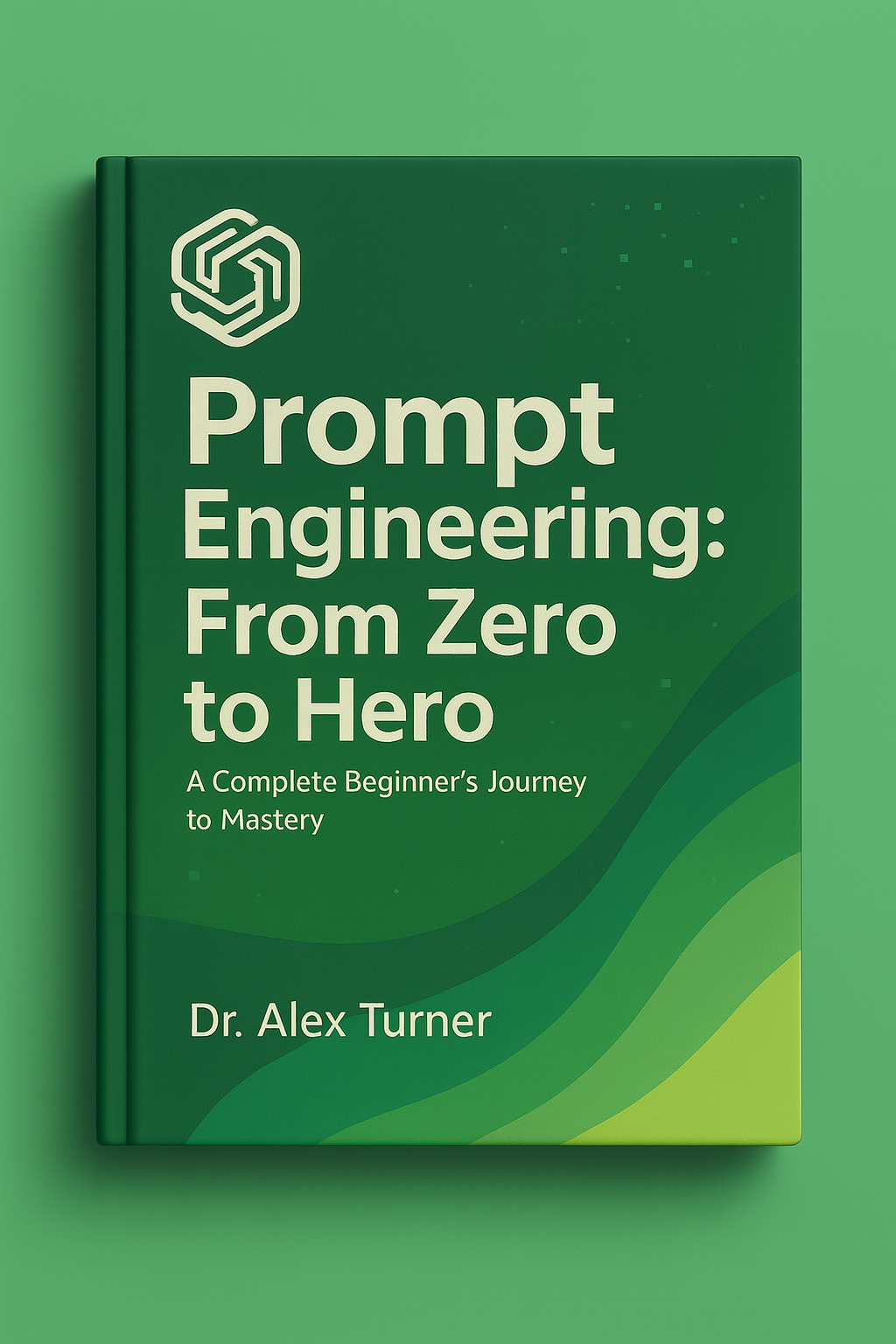
What you will build toward
By the end you should be comfortable designing prompts and context packages for real tasks—writing, analysis, coding support, agents with tools, and domain-specific workflows—while staying explicit about limits, evaluation, and safety tradeoffs.
- Foundations: tokens, decoding, context windows, and the modern model ecosystem
- Core craft: clear instructions, few-shot design, structure, and iteration loops
- Advanced patterns: reasoning frameworks, meta-prompting, and emerging techniques
- Systems: context engineering, applications and agents, security and governance
How to use this book
Read in order if you are new to LLMs or prompting. If you already know the basics, use the chapter hubs below as maps: each hub lists series and articles so you can land exactly where you need to.
Chapters
Chapter 1 — The absolute basics of large language models
What LLMs are, how text is generated, and how the 2025 model/API landscape fits together—so later prompting choices make sense.
Chapter 2 — Fundamentals of prompt engineering
Practical prompt design: zero- and few-shot patterns, structure, personas, iteration, and frequent failure modes.
Chapter 3 — Advanced prompting techniques
Reasoning-oriented patterns (chain-of-thought lineages, ReAct-style loops), meta-cognitive prompts, and newer composite strategies.
Chapter 4 — Context engineering: the new paradigm
Moving from one-off prompts to context systems: window budgeting, compression, memory, and multimodal context.
Chapter 5 — Building LLM-powered applications and agents
Application architecture, tool use, agent loops, and patterns for reliability in real products.
Chapter 6 — Security and safety in the age of LLMs
Threat models for LLM apps (including injection and exfiltration), mitigations, and responsible deployment habits.
Chapter 7 — Domain-specific applications
Adapting prompts and workflows for creative, professional, and specialized settings—without pretending domain expertise you must still verify.
Chapter 8 — The future of prompt engineering
Trends, economics, and skills that age well as models and tooling evolve.
Chapter 9 — Advanced case studies and real-world applications
Enterprise, creative, and research-facing examples that tie earlier lessons to end-to-end thinking.
Chapter 10 — Tools, frameworks, and ecosystem
IDEs, eval harnesses, deployment paths, and open-source communities that support serious prompt-engineering work.
About the author
Dr. Alex Turner curated this book for learners who want a single, coherent path from foundations to production considerations—not hype, not a bag of tricks. Read the full author page →
Share
If this book helps you, pass it along.